Big News: Govt Launches Inspire Initiative 2025 – Pakistan’s First National Semiconductor Program
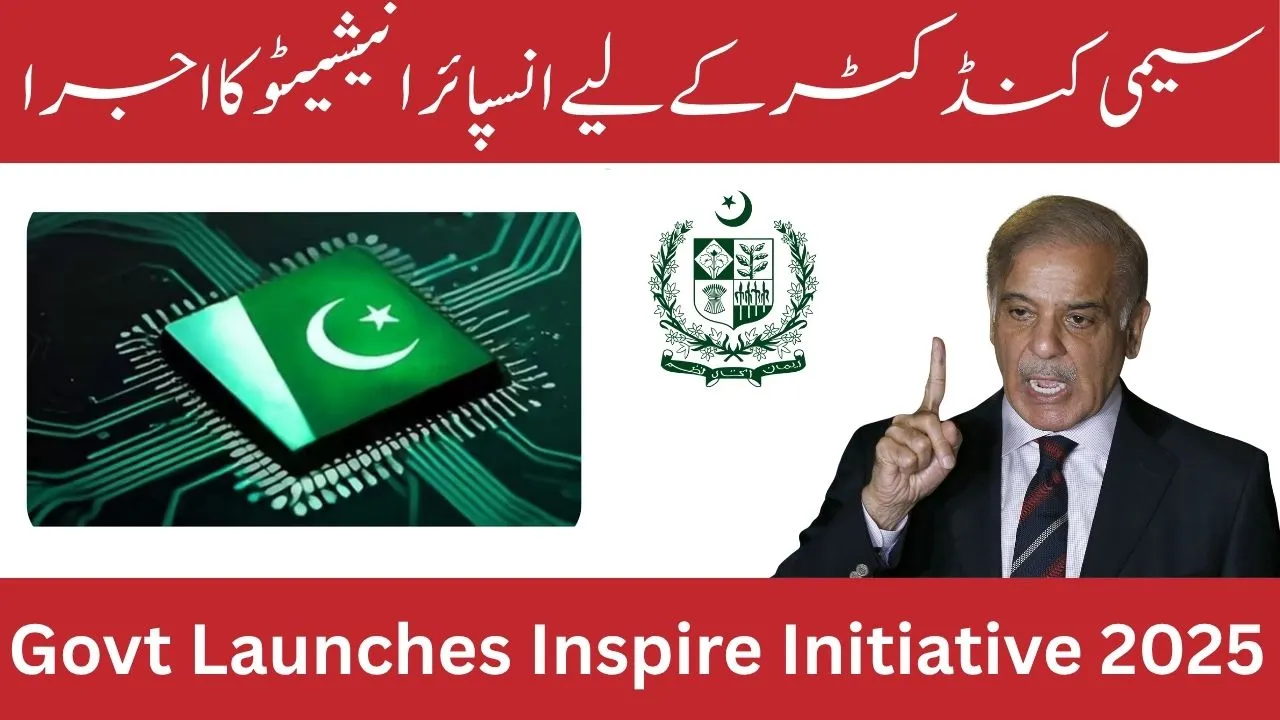
The Prime Minister of Pakistan Shehbaz Sharif has officially launched the Inspire Initiative, a groundbreaking national program focused on semiconductor research, education, and industry development. Announced in Islamabad, this project aims to turn Pakistan into a hub for modern chip technology while training thousands of young people in advanced IT and electronics fields.
This guide will explain what the Inspire Initiative is, how it works, what benefits it brings for students and professionals, and how it fits into Pakistan’s digital transformation vision for 2025.
What is the Inspire Initiative?
The Inspire Initiative is Pakistan’s first-ever national semiconductor development program. Its goal is to build skilled manpower in semiconductor design, fabrication, and research, creating local expertise in a field that powers everything from smartphones to satellites.
The program is part of the government’s larger plan to strengthen the country’s IT, AI, and digital economy sectors, ensuring that Pakistan does not lag behind in the global technology race.
Key Highlights of the Inspire Initiative 2025
| Feature | Details |
| Program Name | Inspire Initiative |
| Launched By | Prime Minister Shehbaz Sharif |
| Launch Date | October 2025 |
| Total Budget | Rs. 4.5 billion under PSDP |
| Target Beneficiaries | 7,200 young professionals |
| Main Focus | Semiconductor design, research, manufacturing |
| Universities Involved | 9 national university clusters |
| Infrastructure Plan | Establishment of Integrated Circuit (IC) labs |
| Supervising Ministry | Ministry of Information Technology and Telecommunication (MoITT) |
Why Semiconductor Research Matters for Pakistan
Semiconductors are the foundation of modern technology — from laptops and 5G phones to AI systems and electric vehicles. For Pakistan, entering this field means:
- Reducing import dependency on foreign chip manufacturers.
- Creating local jobs in engineering, R&D, and manufacturing.
- Enhancing national security by developing indigenous technology.
- Boosting exports through global partnerships in the electronics sector.
As the Prime Minister noted, “Countries leading in AI and semiconductors will shape the future of the world.” This initiative ensures that Pakistan joins that race.
Step-by-Step: How Students Can Join Inspire Initiative
Although the admission process will begin soon, here’s what interested students should prepare:
- Stay Updated on the Ministry of IT’s official website and social media.
- Check Eligibility – Engineering, physics, and computer science graduates are expected to qualify.
- Prepare Academic Records – CNIC, degree certificates, transcripts, and experience (if any).
- Apply Online when the portal opens (expected by end of 2025).
- Appear in Aptitude Test/Interview for selection in university clusters.
- Join Training and receive stipend support during the program.
Government’s Vision Behind the Initiative
The Inspire Initiative is part of Pakistan’s Digital Economy Framework and Vision 2025. The government wants to:
- Strengthen technical education in universities.
- Promote AI, robotics, and embedded systems learning.
- Establish a research ecosystem where academia and industry collaborate.
- Provide funding and mentorship for youth innovation.
- Enable a cashless, knowledge-driven economy through tech leadership.
Training and Opportunities for Students
Under this program, 7,200 youth will be trained in cutting-edge semiconductor technologies. The training includes:
- Chip Design and Fabrication Techniques
- Integrated Circuit (IC) Manufacturing
- Microelectronics and Nano-Engineering
- Software Tools for Semiconductor Design
- Practical Lab Experience through newly built IC labs
Nine university clusters across Pakistan will host these programs, giving access to advanced equipment and real-world industry exposure.
Rs. 4.5 Billion Allocation: What It Means
The government has earmarked Rs. 4.5 billion under the Public Sector Development Programme (PSDP) for the Inspire Initiative.
This budget covers:
- Establishment of semiconductor research labs.
- Setting up university partnerships and training facilities.
- Hiring expert trainers from global semiconductor firms.
- Scholarships and stipends for students enrolled in the program.
This shows a strong financial and political commitment to building a self-reliant tech sector in Pakistan.
Role of the Ministry of IT and Telecommunication
Minister Shaza Fatima Khawaja called this launch a “historic day for Pakistan”, marking the country’s official entry into semiconductor education and production.
Her ministry will supervise:
- Curriculum design and university coordination.
- Partnership with foreign chipmakers and tech firms.
- Quality assurance and performance monitoring.
- Ensuring job placement and global certification for trained youth.
How This Program Benefits Pakistani Youth
The Inspire Initiative opens massive career opportunities for engineering, physics, and IT graduates. Here’s how:
- New Jobs in semiconductor design, testing, and R&D.
- Scholarships for advanced study in electronics and AI.
- Global Career Pathways in chip companies and research labs.
- Startup Support for those building tech innovations locally.
- Increased Employability with government-certified training.
Challenges Pakistan May Face
While the initiative is promising, there are some real-world challenges:
- Shortage of trained semiconductor faculty in local universities.
- High cost of lab equipment and global tech licensing.
- Brain drain – skilled engineers leaving for better pay abroad.
- Need for private-sector collaboration for job creation.
However, experts believe that if the government stays consistent with funding and policy support, these challenges can be overcome within the next few years.
Future Impact: Pakistan’s Path to Tech Sovereignty
If executed properly, the Inspire Initiative can transform Pakistan’s economy by:
- Creating a domestic semiconductor ecosystem.
- Positioning Pakistan as a regional innovation hub.
- Attracting foreign investment in electronics and chip manufacturing.
- Empowering youth to become global innovators, not job seekers.
This could be the most significant step in Pakistan’s technological history since the creation of the National IT Board.
FAQs
1. What is the Inspire Initiative?
It’s a national program to promote semiconductor research, design, and manufacturing in Pakistan, launched by PM Shehbaz Sharif in October 2025.
2. Who can apply for Inspire Initiative training?
Engineering, IT, electronics, and physics students or graduates will be eligible to apply once registration opens.
3. How many students will be trained?
About 7,200 young people will receive specialized training under this program.
4. What is the budget for the program?
Rs. 4.5 billion has been allocated under PSDP to support infrastructure and training.
5. Which ministry is leading the initiative?
The Ministry of Information Technology and Telecommunication (MoITT) is supervising the project.
Conclusion
The Inspire Initiative is not just another government program — it’s a vision for Pakistan’s digital independence. By investing in semiconductor education and research, the government is paving the way for a future where young Pakistanis lead in innovation rather than follow global trends.
For students, this is a once-in-a-generation chance to enter one of the world’s most powerful industries. If implemented sincerely, this initiative could redefine Pakistan’s place in the global tech ecosystem.